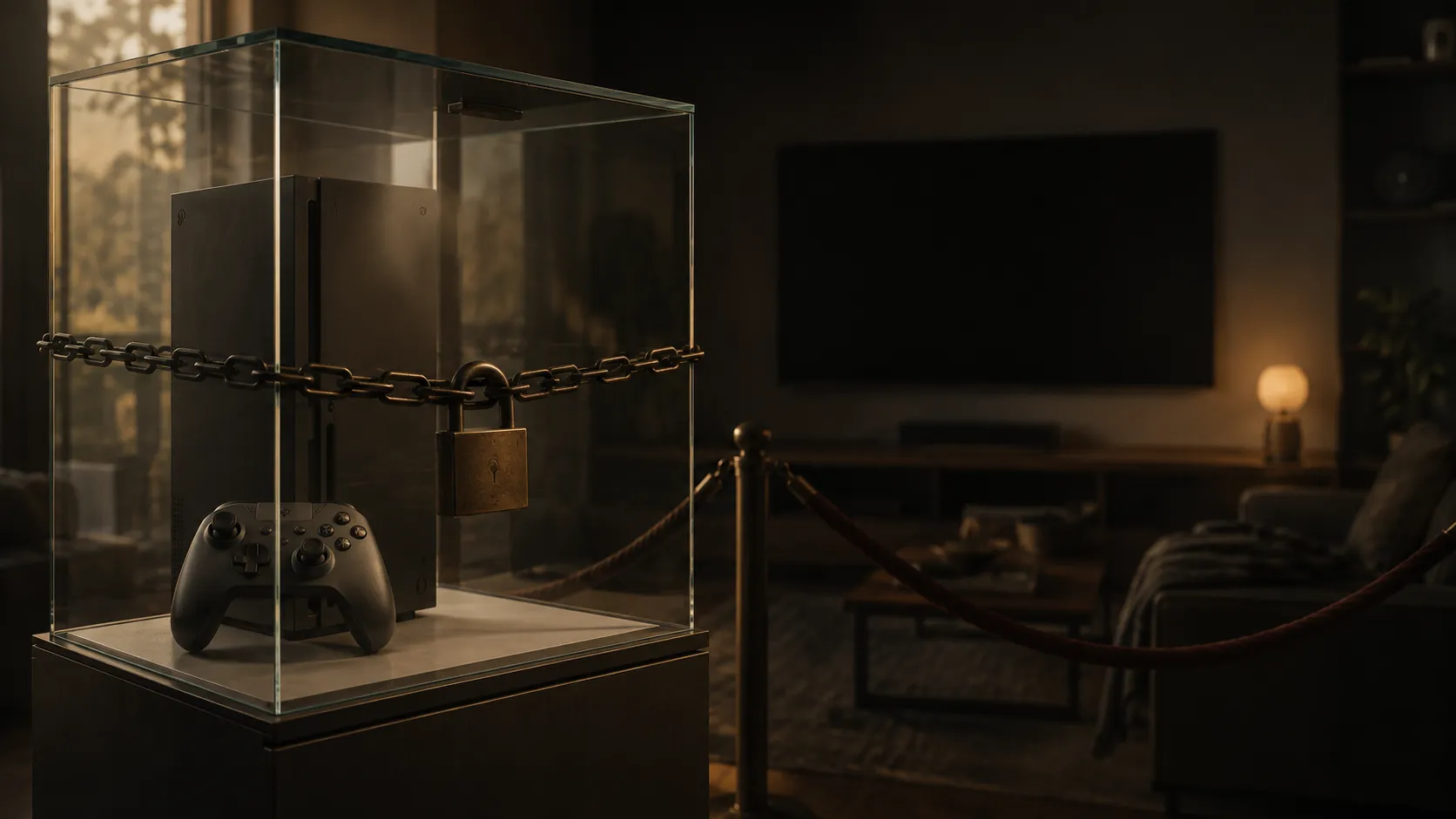
A customer can possess a device, a disc, a receipt, and an account while still being unable to use the product that was supposedly purchased. That contradiction sits at the center of digital ownership. The transaction may resemble a sale, but continued access frequently depends on authentication servers, platform policies, software updates, account status, and licensing infrastructure.
A recent Xbox service disruption reportedly affected the ability to launch some games, including certain disc-based titles, renewing concern about how online validation can influence access to physical media. :contentReference[oaicite:0]{index=0} The broader issue extends beyond gaming: modern ownership increasingly combines a physical object with a revocable digital permission.
Ownership and access are no longer identical
Traditional ownership gives the buyer broad control over a physical object. The owner can use it, lend it, resell it, preserve it, or continue using it after the manufacturer stops operating.
Digital products often provide a narrower bundle of rights. The customer may receive permission to access content under a license agreement rather than ownership of the underlying software or media.
Access may depend on:
- A valid platform account.
- A functioning authentication service.
- Regional availability.
- Supported hardware.
- Current software.
- Publisher licensing.
- Compliance with platform rules.
The distinction is rarely prominent at the moment of purchase. Interfaces use familiar language such as buy, library, and owned, even when the legal and technical arrangement remains conditional.
The resulting expectation gap becomes visible during outages, account disputes, delistings, and platform shutdowns.
Physical media can still depend on digital permission
A disc appears to provide an independent copy. In many modern systems, however, the physical media may function partly as an installation source, entitlement token, or proof that unlocks a digitally managed product.
The console may still require:
- License verification.
- A mandatory update.
- Additional downloaded files.
- Account authentication.
- Server-side activation.
- Compatibility services.
This does not make the disc meaningless. Physical media can preserve transferability, reduce download requirements, and provide evidence of purchase. It does mean that physical possession may no longer guarantee independent operation.
Consumers need clearer information about which portions of a product remain functional offline. A physical package should not create the impression of permanent autonomy when essential components depend on remote infrastructure.
Authentication creates a single control point
Platforms use online validation to manage licensing, prevent unauthorized copying, synchronize accounts, deliver updates, and support purchases across devices. These functions create convenience and commercial control.
They also create concentration risk. When the validation layer fails, many otherwise functional devices can lose access simultaneously.
The technical design should distinguish between situations that genuinely require live validation and those that can rely on cached authorization. A device that recently confirmed a legitimate license may be permitted to operate for a reasonable offline period.
Resilient licensing architecture can include:
- Locally cached entitlements.
- Grace periods.
- Offline-device designation.
- Independent validation of physical media.
- Degraded operation during service incidents.
- Recovery procedures that do not require repurchase.
These controls balance rights management with continuity. The objective is not to eliminate authentication but to prevent infrastructure failure from invalidating legitimate use unnecessarily.
The customer is purchasing platform continuity
A digital purchase is partly a bet on the durability and governance of the platform. The customer depends on the provider to maintain accounts, licenses, identity systems, download infrastructure, compatibility, and customer support.
That dependency can last longer than the commercial life of the product. A game may remain culturally or personally valuable after the platform has shifted attention to newer hardware and services.
Buyers should therefore consider:
- Offline functionality.
- Account recovery quality.
- Family and transfer rights.
- Refund policies.
- Preservation commitments.
- Support for discontinued devices.
- Exportability of user-created data.
The lowest purchase price does not capture the full value of a trustworthy ownership environment.
Digital ownership is also an account-security issue
When purchases attach permanently to one account, account compromise becomes equivalent to losing an entire collection. A hacked, suspended, or incorrectly deleted account may affect games, media, cloud files, achievements, and social relationships simultaneously.
Platforms should provide strong account protections, including:
- Hardware-based authentication options.
- Clear recovery procedures.
- Human escalation for complex cases.
- Notifications for sensitive changes.
- Delays before irreversible account deletion.
- Evidence-preserving appeals.
Consumers should use unique credentials, enable strong authentication, preserve purchase records, and maintain current recovery information.
Account security is not merely a privacy feature. It is part of the property system governing digital purchases.
Licensing language should match the user experience
A marketplace should not describe a transaction in absolute ownership terms while reserving broad rights to remove access without clear explanation.
Transparent commerce should state:
- Whether the customer owns a copy or receives a license.
- Which online services are required.
- Whether the product works offline.
- Whether it may be transferred.
- What happens after account termination.
- Which refund rights apply if access is removed.
Disclosures must be understandable before purchase, not hidden inside lengthy terms that consumers encounter after committing.
Regulators and consumer advocates may increasingly examine whether interface language creates a misleading impression of permanence. Platforms can reduce this risk by aligning commercial language, technical behavior, and contractual rights.
Preservation becomes harder in a service-dependent market
Video games are software, art, cultural records, and historical artifacts. Preservation becomes difficult when a title requires remote authentication, unavailable updates, or online components that a platform no longer supports.
Libraries, archives, researchers, and collectors need lawful mechanisms to preserve works after commercial support ends. Potential approaches include:
- Offline archival builds.
- Authentication removal after end of support.
- Emulated server environments.
- Deposits with recognized archives.
- Preservation exceptions under applicable law.
Commercial services cannot remain online forever. Responsible platform design should plan for product retirement rather than allowing access to disappear accidentally.
Preservation is not identical to providing every online feature permanently. It is about maintaining a meaningful, playable, or researchable version when continued service is no longer commercially practical.
Subscription access changes consumer expectations further
Subscription libraries make the conditional nature of access more explicit. Customers understand that titles may enter and leave a catalog. The tension arises when subscription logic begins influencing products presented as permanent purchases.
Platforms should separate clearly:
- Temporary catalog access.
- Purchased digital licenses.
- Physical-media rights.
- Cloud-streaming availability.
- Promotional entitlements.
A unified library may be convenient, but it can obscure why a title is available and which event can remove it.
Consumers should be able to see the source and durability of each entitlement. A purchased product should not become indistinguishable from a temporary benefit.
Product designers should plan for graceful failure
Digital ownership is ultimately a system-design problem. A well-designed platform assumes that authentication services, internet connections, accounts, and external licenses will sometimes fail.
Graceful failure means legitimate customers retain reasonable use while the system recovers. It can involve cached permissions, clear error messages, local saves, offline modes, and support channels that explain whether the issue is temporary or contractual.
The design principle is straightforward:
A temporary platform failure should not make a legitimate customer's ownership appear imaginary.
Outages reveal the difference between possessing a product and depending on a service for permission to use it. The future of digital ownership will be determined by whether companies treat access continuity, account security, disclosure, and preservation as core product obligations rather than secondary customer-service concerns.
This story follows ourEditorial Policy. Something wrong?Report a correction.
FREQUENTLY ASKED
The customer usually receives a license governed by platform and publisher terms rather than ownership of the underlying intellectual property. The practical rights may include long-term access, but that access can still depend on an account, supported hardware, authentication systems, regional rules, and continuing platform operation.
The disc may provide installation files or proof of entitlement while the console still downloads updates, verifies licensing, retrieves missing content, or checks compatibility. Consumers should examine whether the complete game works offline rather than assuming physical media guarantees independent access.
Platforms can cache verified licenses, provide meaningful offline grace periods, distinguish purchased entitlements from subscriptions, support secure account recovery, and create end-of-service preservation plans. These measures allow rights management without making every legitimate use dependent on continuous server availability.
Use strong unique credentials, enable robust multifactor authentication, preserve transaction records, maintain current recovery information, and understand offline limitations before buying. For personally important titles, consumers may also prefer formats that provide transferability or meaningful offline functionality.