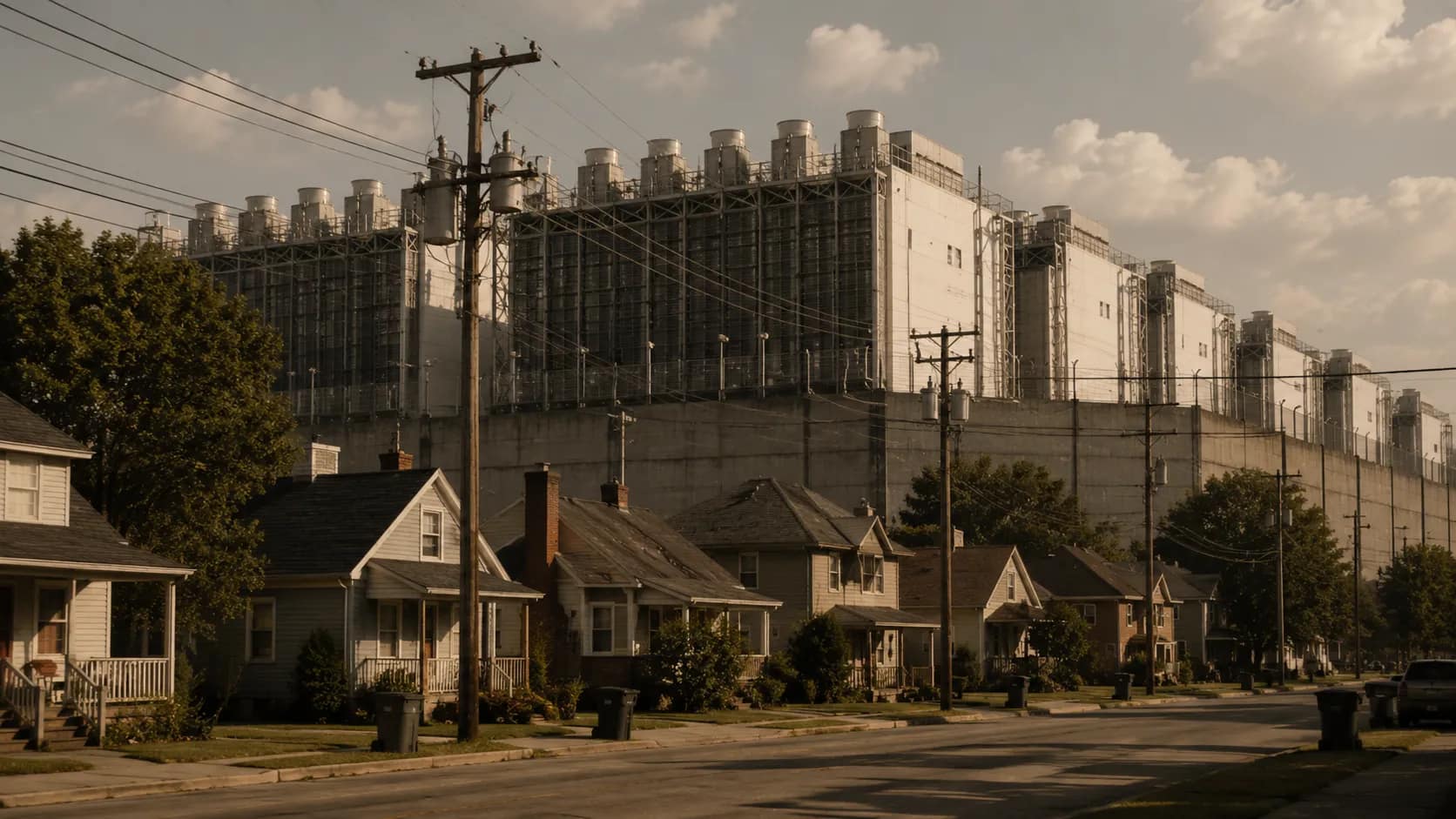
AI infrastructure strategy increasingly begins with a resource that software companies once treated as an invisible utility: electricity. Models, accelerators, networking, and data centers matter, but none can be deployed at scale without reliable power, interconnection capacity, and contracts that determine who receives energy under constrained conditions.
The grid is becoming a platform because it sets the operating boundary for computing. Access to power influences where facilities are built, how quickly capacity can expand, which workloads are economical, and whether ambitious product roadmaps can be delivered.
Compute plans are becoming energy plans
An AI company may forecast demand in terms of users, model calls, or accelerator clusters. Those forecasts eventually become requirements for electricity, cooling, networking, and physical capacity.
The conversion is not simple. Workloads vary by time, model architecture, utilization, and latency. A facility designed for peak demand may operate inefficiently if workload is irregular. A company that expects rapid growth may reserve capacity it cannot immediately use.
Executives should connect product planning to energy planning:
- Which workloads are latency-sensitive?
- Which can be scheduled flexibly?
- How predictable is demand?
- Can models run in several regions?
- What reliability level is required?
- Which growth assumptions drive power commitments?
Without this linkage, product teams may promise capacity that infrastructure teams cannot obtain. Energy should therefore appear in strategic planning alongside talent, capital, and model access.
Interconnection can matter more than generation
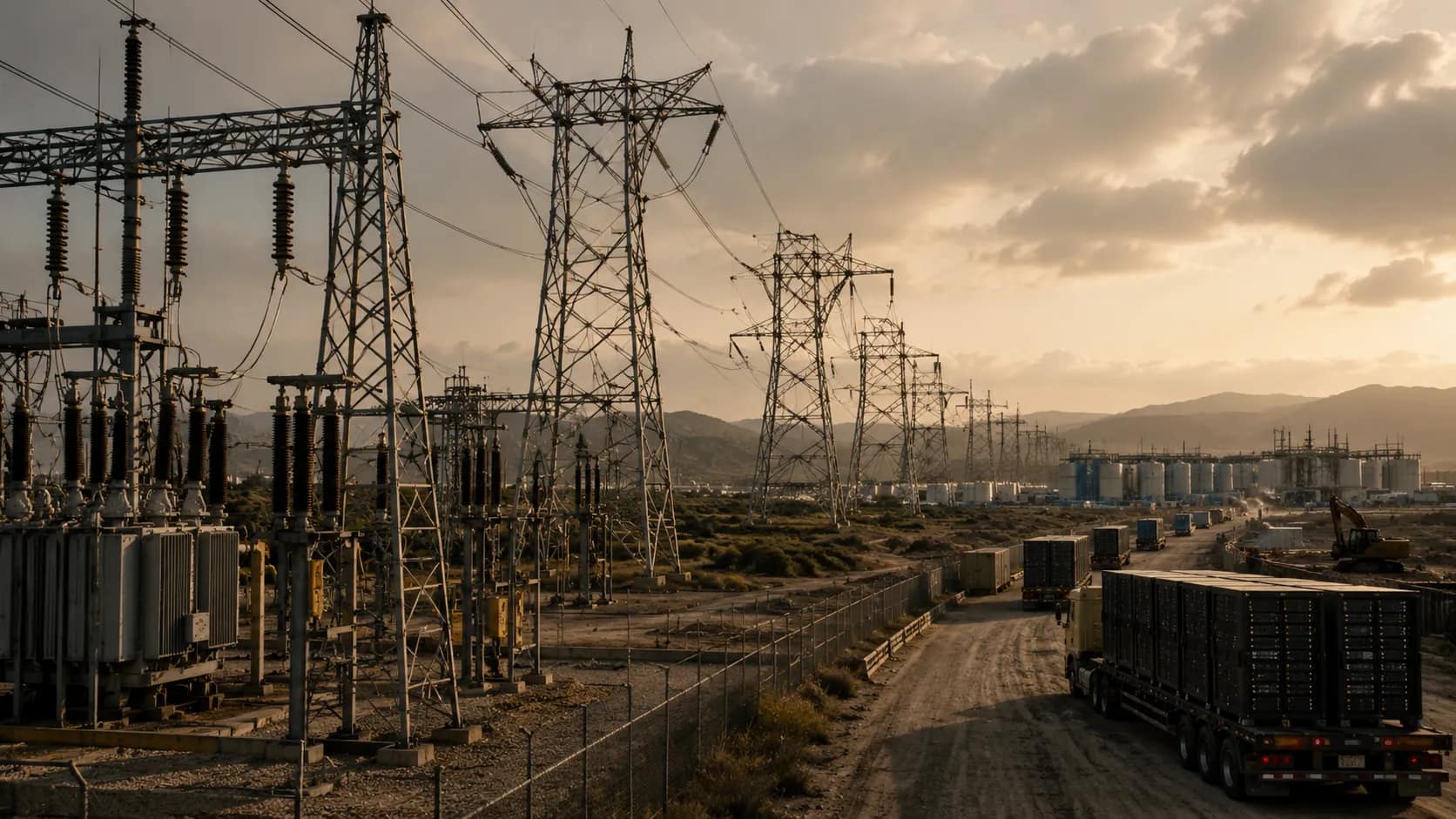
A region may possess substantial generation while still lacking the transmission or interconnection capacity required for a new data center. Physical availability and deliverable availability are different.
Projects depend on:
- Substation capacity.
- Transmission access.
- Interconnection studies.
- Local distribution infrastructure.
- Permitting.
- Equipment availability.
- Coordination among utilities and regulators.
A company that secures land without a credible power path may own a site it cannot use on schedule. The same applies to renewable-energy contracts that do not solve local delivery constraints.
Infrastructure due diligence should verify not only that electricity exists somewhere on the system, but that the required capacity can reach the facility under realistic timelines and operating conditions.
The grid's platform role becomes visible here: access depends on queues, technical rules, regional planning, and contractual priority, much like access to a scarce computing platform depends on allocation policies.
Power contracts encode strategic advantage
Electricity procurement is no longer a back-office expense for high-intensity computing. The structure of the contract can influence cost, reliability, expansion rights, and exposure to market volatility.
Important terms may include:
- Contract duration.
- Price structure.
- Capacity commitments.
- Minimum-use obligations.
- Curtailment rights.
- Expansion options.
- Grid-upgrade contributions.
- Renewable-energy attributes.
- Termination conditions.
Two companies in the same region may face very different economics because one secured long-term capacity, while the other relies on less predictable arrangements.
A favorable contract is not simply the lowest price. It should match the workload. A company with flexible background processing may accept curtailment in exchange for lower cost. A real-time inference service may require stronger reliability.
The contract also determines downside risk. Aggressive commitments can become burdensome if demand grows more slowly than expected or computing efficiency improves faster than planned.
Flexible workloads can become a grid asset
Not every AI workload must run immediately. Training, batch processing, data preparation, evaluation, and some background inference can be scheduled around power availability.
This creates an opportunity for demand flexibility. A facility may shift activity away from constrained periods, coordinate with renewable generation, or reduce load during system stress.
Useful design questions include:
- Which jobs can pause safely?
- How long can they be delayed?
- Can workloads move between regions?
- What data restrictions limit relocation?
- How does rescheduling affect customers?
- Which contracts reward flexibility?
Software architecture and energy strategy become connected. A platform designed for workload portability can respond to grid conditions more effectively than a tightly coupled system.
Flexibility must be tested. Moving workloads may introduce latency, data-transfer cost, or compliance issues. The company should know which operations are genuinely movable rather than relying on a theoretical capability.
Reliability requires more than backup generators
High-availability computing often relies on multiple layers of redundancy. Yet local backup does not solve every power risk.
Reliability planning should consider:
- Grid outages.
- Transmission constraints.
- Fuel supply.
- Equipment failure.
- Extreme weather.
- Cooling limitations.
- Regional correlation of risks.
A facility can maintain emergency power for a limited period, but sustained operation may depend on fuel logistics, maintenance, and environmental restrictions. Redundancy across regions can improve resilience, but only if the regions do not share the same vulnerability.
AI companies should classify workloads by required continuity. Customer-facing services may need rapid failover. Training jobs may tolerate interruption. Internal experimentation may operate at lower resilience.
Applying the highest reliability standard to every workload is expensive. Applying an inadequate standard to critical inference can damage customers and revenue. The architecture should align resilience spending with consequence.
Energy claims need operational substance
Companies often describe renewable procurement, carbon reduction, or clean-energy commitments. The operational meaning of those claims varies.
A contract may purchase environmental attributes without changing when or where electricity is generated. A facility may be matched with renewable energy annually while relying on other generation during constrained hours.
Executives should distinguish:
- Contractual matching.
- Local grid mix.
- Time-based energy use.
- New generation supported.
- Backup generation.
- Transmission constraints.
The purpose is not to dismiss renewable procurement. It is to understand what the arrangement accomplishes and where residual exposure remains.
Customers and regulators may increasingly expect more precise explanations. Energy reporting should connect claims to actual operating boundaries rather than rely on broad labels.
Smaller AI firms face a capacity disadvantage
Large technology companies may negotiate directly with utilities, finance infrastructure, or commit to long-term capacity. Smaller firms usually access power indirectly through cloud providers, colocation operators, or specialized infrastructure vendors.
This creates a layered market. The smaller company may not see the energy contract, but it experiences the result through pricing, capacity limits, region availability, and service terms.
Procurement should ask infrastructure providers:
- How is capacity allocated during shortages?
- Can reserved resources be reduced?
- Which regions support expansion?
- What happens when power cost rises?
- Are customers exposed to curtailment?
- How portable are workloads?
A low compute price may not guarantee future availability. Strategic buyers should evaluate the provider's power position and expansion credibility.
Startups should also avoid designing products that require permanently abundant premium compute unless their economics can support it.
Public policy will shape who can build
Grid access depends on public institutions, utilities, permitting authorities, and regional planning. AI infrastructure cannot expand independently of those systems.
Policy decisions may affect:
- Interconnection priority.
- Cost allocation.
- Environmental review.
- Local incentives.
- Transmission development.
- Demand-response participation.
- On-site generation.
Companies need public-affairs and infrastructure expertise, not only data-center procurement. Community relationships matter because large facilities can influence rates, land use, water demand, and local development.
A project that appears technically feasible may face opposition if the public bargain is unclear. Companies should explain who pays for infrastructure, what benefits remain locally, and how resource risks are managed.
The grid is a shared platform, not a private input. Access will be shaped by the legitimacy of the arrangements that allocate it.
AI strategy must include power optionality
The most resilient companies will avoid dependence on one region, one contract, or one infrastructure provider. Optionality can include several deployment locations, model efficiency, flexible workloads, and architectures that support substitution.
A practical strategy should identify:
- Critical power dependencies.
- Capacity required under several growth scenarios.
- Contractual rights and obligations.
- Workloads that can move or pause.
- Regions with correlated risk.
- Fallback providers.
- Efficiency improvements that reduce demand.
The goal is not to predict energy markets perfectly. It is to prevent a product roadmap from depending on an unexamined assumption of unlimited electricity.
AI competition is often described as a race for models and chips. Those components remain essential, but the race ultimately runs through substations, transmission lines, utility agreements, and public approvals.
The grid is the platform because it decides which computing plans can become operating systems. Companies that treat power as a strategic capability will ship more reliably than those that discover the constraint after customers arrive.
This story follows ourEditorial Policy. Something wrong?Report a correction.
FREQUENTLY ASKED
Power contracts determine cost, reliability, expansion rights, curtailment exposure, and long-term capacity. For compute-intensive businesses, those terms can shape product margins and the ability to serve future demand. A weak energy position can constrain growth even when models, chips, and customers are available.
Not necessarily. A contract may support renewable generation or environmental matching without resolving local transmission, interconnection, or hourly reliability constraints. Companies should verify whether energy can actually be delivered to the facility when required and under which system conditions.
Training, evaluation, batch processing, and some background inference can be delayed or moved to periods with greater power availability. This requires software designed for scheduling and geographic portability. Real-time customer services are generally less flexible and need stronger reliability arrangements.
They should ask how capacity is secured, allocated during shortages, priced under changing energy costs, and expanded across regions. They should also examine reservation terms, workload portability, curtailment exposure, and the provider's ability to maintain service under local grid constraints.